
The Science-Backed Secrets to Faster Muscle Recovery: 4 Essential Tips
Looking for muscle recovery tips that actually get results? If you’re like most people, you’ve probably been focusing too much on the workout and not enough on what happens afterward. As a fitness trainer who’s spent over a decade in the trenches, I can tell you that proper recovery isn’t just important – it’s absolutely essential for transforming your fitness journey.
Here’s the thing: while everyone’s obsessing over the perfect workout plan, they’re missing out on recovery’s hidden potential. In fact, what you do after training can make or break your results. Let’s dive into four game-changing strategies that’ll revolutionize how you think about recovery.
Essential Muscle Recovery Tips for Optimal Sleep Quality
First things first: if you’re not prioritizing sleep, you’re missing out on the most powerful muscle recovery tips available. Research published in the Journal of Strength and Conditioning shows something pretty mind-blowing – athletes getting 8-10 hours of sleep recover up to 30% faster than those only sleeping 6-7 hours.
Want to make the most of your sleep? Start by setting a consistent schedule. Think of it like this: your body loves routine. Additionally, keep your bedroom cool – around 65-68°F (18-20°C). This temperature sweet spot helps your body produce recovery hormones more effectively.
Sleep is the greatest legal performance-enhancing drug that most people are probably neglecting.
Here’s another pro tip: turn your bedroom into a sleep sanctuary. Furthermore, put those phones and tablets away at least an hour before bedtime. Trust me, those late-night scrolling sessions are killing your gains.
Nutrition Timing for Enhanced Recovery
When it comes to effective muscle recovery tips, what you eat matters just as much as when you eat it. proper nutrition for recovery can make the difference between feeling fresh or feeling trashed the next day.
Think of your post-workout meal as your body’s repair kit. For the best results, grab 20-30 grams of protein within 30 minutes after training. Moreover, don’t forget about carbs – aim for 50-100 grams of the complex kind to refill your energy tanks.
Let’s talk about hydration. Guidelines from the American College of Sports Medicine suggest drinking 16-20 ounces of water for each pound you sweat out. For an extra boost, throw in some electrolytes to help your body absorb all that goodness.
Smart Training Programming for Faster Recovery
Here’s where many people get it wrong – they don’t plan their recovery as carefully as their workouts. Understanding progressive overload principles is crucial, but so is knowing when to pump the brakes.
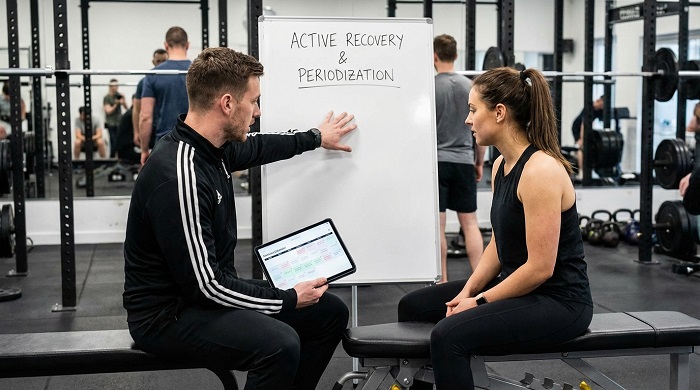
Ever heard of deload weeks? If not, you’re missing out. Every 4-6 weeks, cut your training volume by about half while keeping the intensity. Subsequently, you’ll come back stronger than ever.
On top of that, try alternating between tough and lighter days. For instance, if you crush legs on Monday, maybe take it easier with some upper body work on Tuesday.
Active Recovery and Mobility Work
Now, let’s bust a myth: recovery doesn’t mean lying on the couch all day. In fact, some of the best muscle recovery tips involve getting up and moving – just differently than during your workouts.
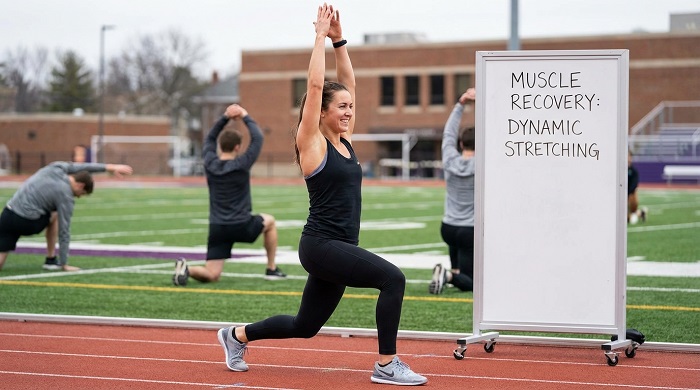
Start with some easy cardio – maybe a 10-15 minute walk or light bike ride after training. Then, move into some dynamic stretching. This combo works wonders for fighting off soreness and keeping you limber.
Recovery is where the magic happens. Your muscles don’t grow during training – they grow during recovery.

Let me tell you about your new best friend: the foam roller. Just 10 minutes of rolling can make you feel like a new person. Roll each major muscle group for about 30-60 seconds, and you’ll thank me later.
Want to take it up a notch? Try alternating between hot and cold treatments. Start with 2 minutes hot, then 30 seconds cold, and repeat this 3-4 times. Your muscles will love you for it.
The Path to Better Recovery
Look, these muscle recovery tips aren’t complicated, but they do require consistency. Remember, you can’t out-train poor recovery – no matter how hard you push in the gym.
Try adding one new recovery technique each week. This way, you won’t feel overwhelmed, and you’ll be more likely to stick with it. Additionally, pay attention to how your body responds and adjust accordingly.
Ready to transform your training? These science-backed muscle recovery tips are your ticket to better results. Start implementing them today, and you’ll feel the difference tomorrow. Because at the end of the day, it’s not just about pushing harder – it’s about recovering smarter.