
The Power of Protein Timing: 5 Proven Strategies to Maximize Muscle Growth
Have you ever hit the gym consistently but felt frustrated by slow muscle gains? You’re not alone. The secret often comes down to protein timing – a game-changing factor I’ve seen transform countless clients’ results during my 10+ years as a fitness coach. Let me share why this often-overlooked piece of the puzzle could be exactly what you need.

I’m excited to share these science-backed strategies that’ll completely change how you think about building muscle. Actually, the timing of your protein intake matters more than you might think. Recent studies in the Journal of Sports Science have found that smart protein timing can boost muscle protein synthesis by up to 25%.
The Science Behind Protein Timing and Muscle Growth
Let’s break down what really happens when you time your protein right. While getting enough protein throughout your day matters, it’s not the whole story. Understanding muscle protein synthesis reveals that your body doesn’t use protein the same way all day long.
You’ve probably heard about the “anabolic window” after workouts. However, recent research shows it’s more forgiving than we once thought. For instance, you’ll still get great results if you eat protein within two hours of your workout, not just the traditional 30-minute window.
“The most critical aspect of protein timing isn’t just when you take it, but maintaining consistency in your approach.” – Dr. Stuart Phillips, Protein Metabolism Expert
Strategic Protein Timing Windows for Maximum Results
First, let’s talk about what to eat before you train. Try getting 20-30 grams of quality protein about 2-3 hours before hitting the gym. This approach helps protect your muscles during tough workouts. Additionally, it keeps your energy levels steady throughout your session.
What about after your workout? Post-workout nutrition guidelines shows why fast-acting protein can make a huge difference. For example, whey protein shakes work great here because they’re quick to digest when your muscles are hungry for nutrients.
Nighttime is another crucial window we can’t ignore. Interestingly, slow-digesting proteins can support your recovery while you sleep. Therefore, having some cottage cheese or casein protein before bed might be just what you need.
Optimizing Protein Sources for Different Timing Windows
The type of protein you choose matters just as much as when you take it. Research from the International Society of Sports Nutrition backs this up with solid evidence about absorption rates.
For your pre-workout meal, stick to easy-to-digest options like egg whites or whey isolate. On the other hand, post-workout is perfect for fast proteins mixed with some quick carbs to help everything work better.
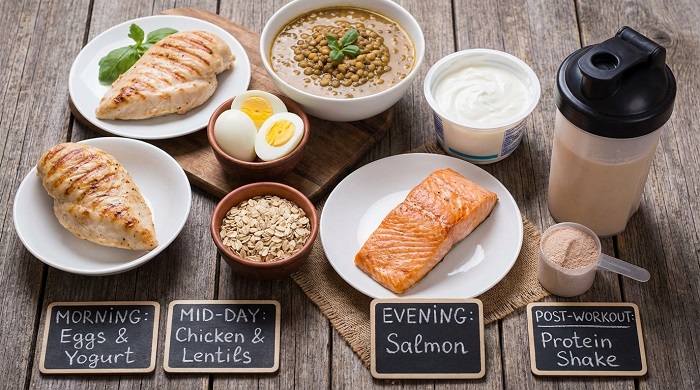
When it comes to evening protein, you’ll want to think differently. For instance, Greek yogurt or cottage cheese work great because they release amino acids slowly throughout the night.
Advanced Protein Timing Strategies for Athletes
If you’re training hard as an athlete, you’ll need to level up your protein timing game. Obviously, more intense training means paying closer attention to when you eat. Furthermore, if you’re training multiple times a day, you’ll need to plan your protein intake carefully.
“Success in athletic performance isn’t just about how much protein you consume, but mastering the timing of when you consume it.” – John Meadows, Professional Bodybuilder
Training specific muscle groups? You might want to adjust your protein timing around those workouts. Moreover, matching your portion sizes to how hard you’re training can help you recover better.
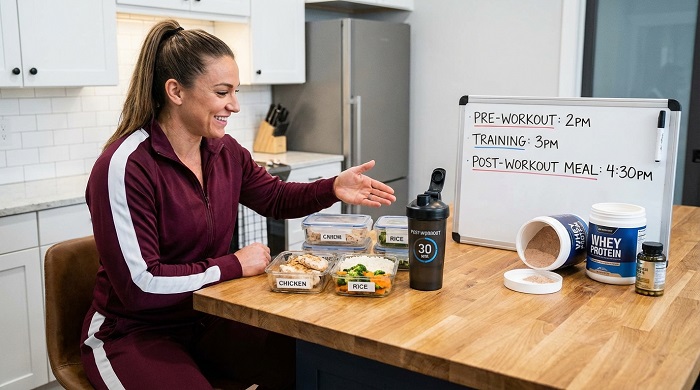
Fine-Tuning Your Personal Protein Timing Protocol
Creating your own protein timing plan doesn’t have to be complicated. First, look at your weight and how much you exercise. Then, think about when you usually train and how well you recover.
Keep track of how you feel for about 4-6 weeks while sticking to your protein timing plan. Subsequently, you can make changes based on what’s working. Progress tracking methods will help you stay on top of your results.
Remember, you don’t need to overthink this. Start with the basics and add more advanced strategies as you get comfortable.
Conclusion
Getting your protein timing right takes practice, but I’ve seen the amazing results it can bring. By following these strategies consistently, you’ll build muscle faster and bounce back quicker from workouts. The key is starting simple and making adjustments as you go.
Why not start planning your protein intake for tomorrow’s workout right now? Remember, the best protein timing strategy is one you’ll actually stick to. Your gains are waiting – let’s make them happen!